Breed Health

Maine Coon
Health, Explained

The conditions that matter in this breed, in plain language: what they are, what a cat may look like when something is wrong, and how each one is checked before it ever reaches a kitten.

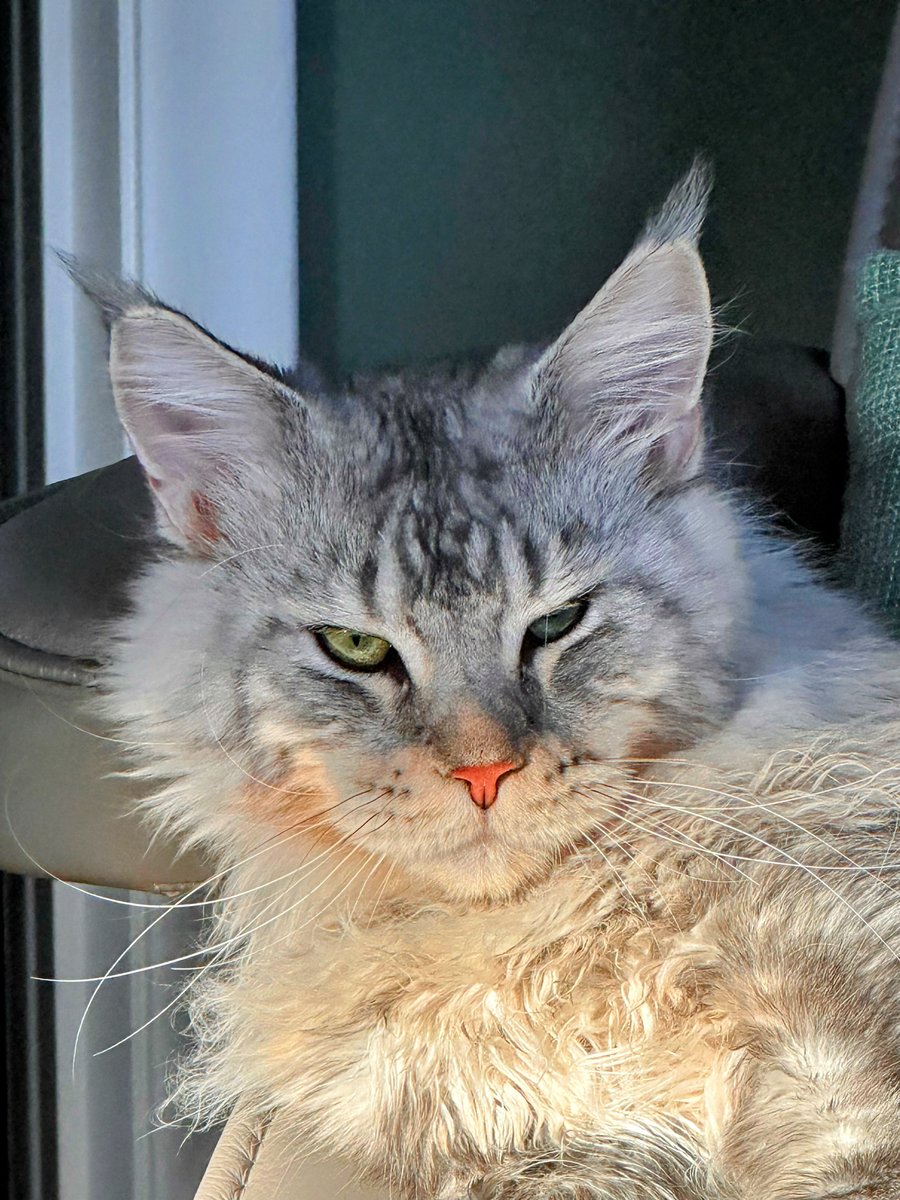
Close-up portrait of a Maine Coon at Fluff N' Tuffs

A healthy breed starts with honest information

Maine Coons are generally robust cats, but like every breed they carry predispositions. A predisposition is not a diagnosis. It means a cat is more likely than the average cat to develop something, and that a breeder should know about it before pairing two cats.

Some of these conditions are governed by a single gene, which makes testing simple and decisive. Others involve many genes, or a gene plus age, weight, and chance. For those, tests narrow the odds but never guarantee an outcome, so health is judged cat by cat rather than by paperwork alone.

This page is written so that a family waiting for a kitten can read it and understand exactly what was tested, what was not, and why.

The Conditions

What We Watch For

01

Hypertrophic Cardiomyopathy (HCM)

Complex: one gene plus other factors

The most common heart disease in cats, and the one Maine Coon breeders screen for most often.

In HCM the muscular wall of the heart thickens, especially in the left ventricle. The thickened muscle becomes stiff, so the heart fills less efficiently and has to work harder to move blood. Over time this can lead to heart failure, fluid in the chest, or a blood clot that lodges where the aorta splits: the cause of sudden hind-leg paralysis in cats.

Maine Coons are one of the breeds where HCM shows up more often than in the general cat population. A well-known piece of the picture is a variant in the MYBPC3 gene, often called A31P. One copy of that variant raises a cat’s risk somewhat; two copies raise it further. It is a risk factor, not a verdict: plenty of cats with the variant never develop HCM, and plenty of affected cats test clear of it. That is exactly why an ultrasound of the heart matters as much as a DNA swab.

We do not breed cats that carry the MYBPC3 variant, even a single copy. Our goal is to remove it from our lines altogether, so every cat in our breeding program tests clear on DNA and is also checked by heart ultrasound.

HCM is famously quiet. Many cats show no sign at all until the disease is advanced, which is why breeding cats are screened on a schedule rather than once.

What you might notice

  • A murmur or abnormal rhythm heard by a vet
  • Tiring easily, hiding more, or seeming withdrawn
  • Faster or laboured breathing, especially at rest
  • Open-mouth breathing or panting in a cat that is not hot or stressed
  • Sudden weakness or paralysis of the back legs: an emergency

How it is checked

Echocardiogram performed by a cardiologist, repeated every one to two years in breeding cats, alongside a DNA test for the MYBPC3 variant.

02

Hip Dysplasia (HD)

Polygenic: many genes, plus environment

A looseness in the hip joint that lets the ball sit imperfectly in the socket, leading to wear over time.

In a normal hip the head of the femur fits snugly into the socket of the pelvis. In hip dysplasia the joint is looser than it should be. The femur shifts, the surfaces rub instead of gliding, and the joint gradually wears. Some cats have obvious changes on an x-ray and move comfortably; others have milder-looking films and clear discomfort.

This is not a single-gene condition, so there is no DNA test that can promise a clear hip. It is influenced by several genes, and body weight, growth rate, and activity all play a part. Large, heavy cats put more load through the joint, which is one reason the breed watches it.

Cats hide soreness well. A Maine Coon with sore hips may simply stop jumping onto high shelves, or start pulling itself up with the front legs instead of springing. Those small changes are easy to miss in a cat that is otherwise affectionate and eating well.

What you might notice

  • Reluctance to jump up or down, or hesitating before a jump
  • Stiffness when getting up after resting
  • A bunny-hopping gait in the back legs when moving quickly
  • Grumpiness when the hips or hindquarters are handled
  • Muscle loss over the back and hind legs in long-standing cases

How it is checked

Hip radiographs graded through PawPeds (also OFA or PennHIP), taken once the cat is fully grown, usually around ten months of age or older.

03

Slipped Capital Femoral Epiphysis (SCFE)

Rare: reported mainly in young cats

A rare hip condition where the growth plate at the top of the femur gives way, separating the ball of the hip from the rest of the bone.

The head of the femur connects to the shaft through a growth plate, the soft layer of cartilage where bone lengthens in a young cat. In SCFE that plate weakens and the femoral head slips out of position. The result is a hip that is unstable and painful, and it usually appears in a cat that is still growing rather than in an older one.

Although both affect the hip, SCFE is not related to hip dysplasia. Hip dysplasia is a problem with how the hip joint itself is shaped and fits together, while SCFE is a failure of the growth plate in the femur. A cat can have one without the other, and hip dysplasia screening does not tell you anything about SCFE risk.

One current line of thinking points to the age at which a cat is neutered. The growth plates are meant to close as a cat reaches sexual maturity, and early neutering may delay that closure, leaving the plate open and vulnerable for longer. Waiting until a male has reached sexual maturity before neutering appears to lessen the risk, and this fits with what is seen in practice: the condition is almost never reported in intact males.

SCFE is uncommon in cats overall, but it has been described in Maine Coons, with young males reported more often than females. Because the number of documented cases is small, most of what is known comes from individual case reports rather than large studies. That makes it a condition to know about and recognize, not one that can be screened for in advance.

A young Maine Coon that suddenly stops using a back leg, or that is clearly painful in the hip without any fall or accident to explain it, should be seen by a veterinarian promptly. Early assessment gives the best range of options.

Information on SCFE is still limited, and we will keep this page updated as more becomes available. This is one of the reasons we highly recommend health insurance for your kitten. SCFE can be an expensive medical emergency, and it is not covered by our health guarantee because there is no way to prevent it or to pre-screen kittens for it. The risk is low, especially in females, but it is not zero.

What you might notice

  • Sudden hind-leg lameness with no injury or fall
  • Pain or resentment when the hip is moved
  • Stiffness, or a leg held in an unusual position
  • Reluctance to stand, walk, or climb stairs
  • A popping or clicking sensation at the hip on examination

How it is checked

No screening test exists. Diagnosis is by hip radiographs, sometimes with CT, and treatment is decided by the veterinarian: femoral head and neck excision has been reported to give good improvement in affected young cats.

04

Spinal Muscular Atrophy (SMA)

Autosomal recessive: LIX1

An inherited nerve and muscle condition that affects kittens from a very young age.

SMA damages the nerves that tell muscles to move, so the muscles weaken and waste away. In the Maine Coon form, caused by a variant in the LIX1 gene, affected kittens are noticeably weak and wobbly, with poor muscle development and often a tremor. It is a serious condition with no treatment, which is why it is tested for rather than managed.

Because SMA is recessive, a cat needs two copies of the variant to be affected. A cat with one copy is a carrier: completely healthy, but able to pass the variant to some kittens. A carrier bred to a clear cat will never produce an affected kitten, so on its own a carrier poses no risk to its offspring.

Even so, we do not breed SMA carriers. Pairing a carrier with a clear cat is safe for the kittens, but some of those kittens would still be carriers, and the variant would quietly continue through the lines. Our goal is to remove SMA from our lines altogether, so every cat in our breeding program tests clear.

What you might notice

  • Weakness and poor muscle development in young kittens
  • Trembling or a fine tremor, especially when moving
  • Difficulty standing, walking, or holding the head up
  • Slow growth compared with littermates

How it is checked

DNA test through a panel such as Wisdom Panel. Results are clear, carrier, or affected, and breeding decisions follow from there.

05

Polycystic Kidney Disease (PKD)

Autosomal dominant: PKD1

A condition in which fluid-filled cysts form in the kidneys and gradually reduce how well they work.

PKD causes cysts to develop in the kidney tissue. They start small and grow, crowding out working kidney tissue. In many cats the disease is quiet for years and then shows up as declining kidney function in middle or later life.

Unlike SMA, PKD is dominant: a single copy of the PKD1 variant can cause disease. That makes the breeding rule simple and strict. A cat that carries the variant should not be bred, because roughly half of its kittens would inherit it and could develop the disease. Because there is no “silent carrier” state for a dominant condition, testing and removing carriers closes the door completely.

We do not breed any cat that carries the PKD1 variant. Our goal is to keep PKD out of our lines entirely, so every cat in our breeding program tests clear.

What you might notice

  • Increased drinking and urination
  • Weight loss and a dull coat
  • Reduced appetite, nausea, or vomiting
  • Enlarged or irregular kidneys felt on examination
  • Signs of kidney failure on bloodwork

How it is checked

DNA test for the PKD1 variant, and ultrasound of the kidneys where a vet wants to look directly at the tissue.

06

Patellar Luxation (PL)

Polygenic: heritable tendency

A kneecap that slips out of its groove, sometimes on one side and sometimes on both.

The kneecap normally rides in a groove at the front of the stifle joint. When that groove is shallow, or the pull of the muscles is slightly off line, the kneecap can pop out to the inside or outside of the leg. Cats can live with a mild, occasional slip without complaint; more severe cases cause lameness, a skipping gait, and arthritis over time.

Patellar luxation is seen in many breeds, including large cats, and the tendency runs in families rather than following one gene. It is graded from one to four by feel and confirmed with x-rays. Mild cases are usually managed with weight control and joint support; grade three and four cases may need surgery.

What you might notice

  • A skip or hitch in the stride, sometimes only every few steps
  • Holding a back leg up briefly, then walking normally again
  • Stiffness after rest, or reluctance to jump
  • A kneecap that can be felt slipping out of place

How it is checked

Physical examination by a veterinarian, with radiographs to confirm the grade and check for arthritis.

Day To Day

Everyday Health, Not Just Genetics

Dental health

Gum inflammation and tartar build up earlier in some Maine Coons than in other cats. Regular checks, brushing where the cat allows it, and professional cleaning protect the heart and kidneys as well as the mouth.

Weight and growth

A Maine Coon is meant to be large and substantial, not overweight. Extra weight loads the hips, the heart, and the joints, so we keep cats lean and let them grow slowly.

Grooming-related skin issues

A heavy coat mats easily behind the legs and under the belly. Mats trap moisture and irritate the skin, so regular brushing is part of health care, not just appearance.

The Toolbox

How Each Condition Is Screened

DNA tests answer questions about inheritance. Physical checks answer questions about the cat in front of you. Responsible breeding uses both.

Maine Coon health screening methods, timing, and purpose
ConditionMethodWhenWhat it tells us
HCMDNA (MYBPC3) + echocardiogramDNA once; echo every 1–2 yearsWe breed only MYBPC3-clear cats. The echo shows what the heart is actually doing today.
Hip dysplasiaHip radiographs, PawPeds gradingFrom 10 months of ageA graded picture of joint fit, used to decide pairings and watch for early wear.
SMADNA (LIX1)Once, before breedingClear, carrier, or affected. We breed only SMA-clear cats to remove the variant from our lines.
PKDDNA (PKD1), kidney ultrasound if neededOnce, before breedingWe breed only PKD-clear cats: a carrier is never bred.
Patellar luxationVeterinary examinationAt pre-breeding health checksCatches a slipping kneecap before it becomes arthritis or a lameness issue.
SCFENo screening: radiographs if signs appearIf a young cat goes lameRare and not predictable, so awareness and prompt vet care are the tools.

Fluff N' Tuffs

How We Apply It

Every breeding cat here goes through a DNA panel that covers the conditions known to affect the breed, including HCM (MYBPC3), SMA (LIX1), and PKD (PKD1), plus hip evaluation through PawPeds once the cat is old enough for a meaningful radiograph.

The pairing rules follow from how each condition is inherited. For a recessive condition like SMA, a carrier paired with a clear cat cannot produce an affected kitten, but we go further: we do not breed SMA carriers at all, so the variant is removed from our lines. For a dominant condition like PKD, a cat carrying the variant is simply not bred. For HCM, we do not breed cats carrying the MYBPC3 variant, and DNA results are combined with heart ultrasound rather than trusted on their own. Our aim is to remove these variants from our lines.

Testing is not about sorting cats into good and bad. It is about knowing what is there, making pairings that protect kittens, and keeping enough genetic diversity in the breed that the next generation is healthier than the last. A clear test is reassuring. A careful pairing is what actually protects a litter.

A note on medical advice

This page is educational. It is not a substitute for a veterinarian examining your cat. If a cat is breathing hard, cannot use a leg, or is suddenly withdrawn, contact a veterinarian right away rather than waiting to see whether it passes.

Questions?

Ask us anything about our testing

If you want to see a specific cat's results, or talk through what a carrier result means for a kitten, reach out anytime.

Get In Touch